
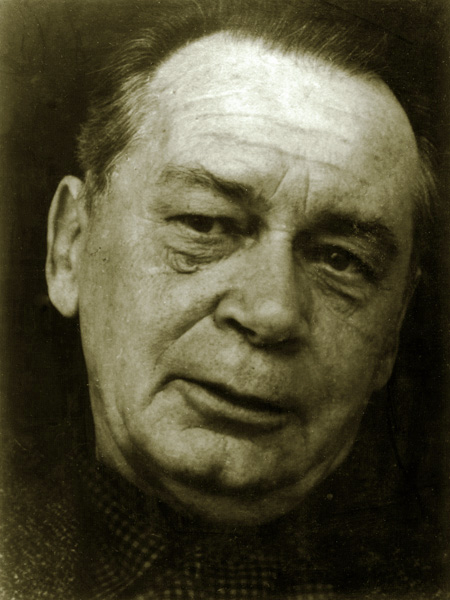
Heinrich Blücher Collection
Heinrich Blücher (29 January 1899 – 31 October 1970) was a German philosopher whose work is preserved primarily through his teaching rather than through published writings. He was the second husband of Hannah Arendt (14 October 1906 – 4 December 1975), the German-American historian and philosopher and one of the most influential political theorists of the twentieth century. Blücher and Arendt first met in Paris in 1936, and their intellectual partnership remained central to both of their lives.
Blücher’s philosophical legacy survives largely in the form of lecture recordings and transcripts created during his years teaching at The New School for Social Research in New York City and at Bard College, where he served as a visiting professor beginning in 1952. He was appointed directly by Bard President James Case, rather than through a faculty search, and went on to design and direct the College’s Common Course, now known as the First Year Seminar. Blücher served as the primary lecturer for the first-year section of the course, which focused on the history of philosophy. These lectures were delivered in Sottery Hall, located just behind the administrative offices in Ludlow.
Over the course of the next seventeen years, Blücher taught continuously at Bard and at the New School, leaving behind scores of tape recordings of his lectures but very little written material. Aside from two art reviews, none of his writings were published during his lifetime. His teaching, delivered without formal manuscripts, relied on brief handwritten note cards and extensive improvisation, making the survival of these recordings especially significant. In a deed of gift, Hannah Arendt later left the tapes of Blücher’s lectures and related manuscripts to Bard College, a gesture that underscores the importance she placed on his spoken philosophical work.
These recordings have been digitized and now form the core of the Heinrich Blücher Collection, with additional related materials, made available through Bard College’s Institutional Repository for public access.